
Dark Web Links Marketplaces
This guide is for cybersecurity-aware readers seeking insights into dark web marketplaces and their risks.
For most readers, "Legality and Safer Alternatives to Marketplace Directories" is the best starting point because it addresses legal exposure and reduces reliance on unstable, potentially deceptive onion links. Researchers and journalists comparing claims should choose "How to Evaluate a Dark Web Marketplace Claim", while cautious newcomers may benefit first from the glossary. The tracing section suits readers focused on cryptocurrency attribution rather than marketplace selection.
Selection Criteria
Link Provenance
We favour addresses published through a verifiable official channel rather than copied from directories, forums, or search results. Cross-check the onion address across independent sources and reject links with unexplained character changes.
Cryptographic Verification
A legitimate operator may sign address announcements with a consistent PGP identity. We suggest checking the signature and fingerprint independently; a displayed fingerprint alone does not prove control.
Impersonation and Phishing Risk
Look for cloned layouts, altered deposit details, forced redirects, and urgent payment prompts. Compare addresses character by character and leave immediately if the site requests unusual credentials, downloads, or wallet actions.
Reputation Evidence
We assess dated, specific reports from multiple independent communities rather than promotional reviews or affiliate directories. Repeated complaints about exit scams, frozen balances, selective withdrawals, or moderator censorship should outweigh popularity claims.
Legal and Ethical Scope
A marketplace may expose visitors to illegal listings even when they do not transact. We advise checking applicable law and research policies before access; this criterion does not suit anyone seeking operational guidance for prohibited purchases.
Exposure and Data Collection
Review what the service requests before creating an account, including scripts, personal details, deposits, and downloadable files. Prefer minimal data collection, and reject any site requiring identifying information or software installation without a defensible reason.

Dark Web Links Marketplaces Comparison
- Marketplace Name
- AlphaBay
- Status
- Active
- Type
- General Goods
- User Anonymity
- High
- Risk Level
- High
- Legality
- Illegal
- Marketplace Name
- Silk Road 3.0
- Status
- Active
- Type
- General Goods
- User Anonymity
- High
- Risk Level
- High
- Legality
- Illegal
- Marketplace Name
- Dream Market
- Status
- Defunct
- Type
- General Goods
- User Anonymity
- High
- Risk Level
- High
- Legality
- Illegal
- Marketplace Name
- Hansa Market
- Status
- Seized
- Type
- General Goods
- User Anonymity
- High
- Risk Level
- High
- Legality
- Illegal
- Marketplace Name
- Empire Market
- Status
- Exit-Scammed
- Type
- General Goods
- User Anonymity
- High
- Risk Level
- High
- Legality
- Illegal
- Marketplace Name
- White House Market
- Status
- Active
- Type
- General Goods
- User Anonymity
- High
- Risk Level
- Moderate
- Legality
- Illegal
- Marketplace Name
- DarkMarket
- Status
- Seized
- Type
- General Goods
- User Anonymity
- High
- Risk Level
- High
- Legality
- Illegal
- Marketplace Name
- Cannabis Road
- Status
- Active
- Type
- Niche (Cannabis)
- User Anonymity
- High
- Risk Level
- Moderate
- Legality
- Illegal
- Marketplace Name
- The Pirate Bay (on Tor)
- Status
- Active
- Type
- Content Sharing
- User Anonymity
- Moderate
- Risk Level
- Moderate
- Legality
- Legal (varies by content)
- Marketplace Name
- Onion City
- Status
- Active
- Type
- General Goods
- User Anonymity
- High
- Risk Level
- High
- Legality
- Illegal
Dark Web Marketplace Links: What Users Are Actually Looking For
The dark web refers to a part of the internet that is not indexed by traditional search engines, requiring specific software, configurations, or authorisation to access. Within this space, darknet marketplaces are online platforms where users can buy and sell goods and services, often illicit in nature. An onion link is a specific type of URL that directs users to a website hosted on the Tor network, while a mirror is a duplicate of a website that is hosted on a different server to ensure continued access even if the original site goes down.
It's crucial to distinguish marketplaces from other online entities. Forums are discussion platforms, search engines help users find content, and directories list various sites without facilitating transactions. Legitimate onion services operate within the dark web but do not engage in illegal activities. This article does not publish or endorse live links to illicit markets due to the changing nature of addresses, the prevalence of clones, and the risk of many named services being seized or rendered defunct.
For users seeking to navigate this complex environment, understanding these definitions and distinctions is essential. This knowledge equips individuals to evaluate the risks associated with dark web marketplaces while avoiding potential pitfalls.
Dark Web Marketplaces Compared by Type
We can categorise dark web marketplaces into several types, each serving distinct purposes and user needs. Below is a comparison of five marketplace categories, highlighting their typical listings, payment models, major risks, and legal exposure.
| Marketplace Type | Typical Listings | Payment Model | Major Risks | Legal Exposure |
|---|---|---|---|---|
| General-Purpose Markets | Drugs, counterfeit goods, weapons | Cryptocurrency (e.g., Bitcoin) | High risk of scams, law enforcement actions | Illegal in most jurisdictions |
| Digital-Goods Markets | Hacking tools, software, stolen accounts | Cryptocurrency | Risk of malware, digital fraud | Illegal, but may vary by content |
| Stolen-Data Shops | Credit card information, personal data | Cryptocurrency | Identity theft, scams | Illegal, significant legal risks |
| Access-Broker Listings | Access to compromised accounts, botnets | Cryptocurrency | High risk of account bans, scams | Illegal, often linked to cybercrime |
| Privacy-Focused Marketplaces | Privacy tools, VPN services | Cryptocurrency, sometimes cash | Risk of poor service, scams | Legal, but services may vary |
General-purpose markets like AlphaBay and Silk Road 3.0 offer a wide range of illegal goods, appealing to those looking for anonymity and convenience; however, they carry high risks of scams and law enforcement actions. Digital-goods markets focus on virtual products, but users must be wary of malware and the potential for digital fraud. Stolen-data shops provide access to sensitive information, exposing buyers to identity theft risks, while access-broker listings can lead to account bans or scams.
Privacy-focused marketplaces may offer legal options for users seeking anonymity tools, but they are not without risks. The legal exposure varies significantly, with most general-purpose and stolen-data shops operating illegally, while privacy services may fall within legal boundaries depending on local laws. Understanding these distinctions is crucial for anyone navigating the dark web landscape.
Notable Darknet Markets: Active Claims, Defunct Services, and Seizures
The landscape of darknet marketplaces is ever-changing, with some platforms thriving while others have fallen victim to law enforcement or exit scams. Currently, AlphaBay and Silk Road 3.0 are claimed to be active, offering general goods with high user anonymity and risks associated with illegal transactions. Both marketplaces are known for their extensive listings, but they pose significant legal exposure due to the nature of their offerings.
In contrast, Dream Market has been confirmed as defunct since its closure in early 2019, while Hansa Market was seized by law enforcement in mid-2017 during a significant crackdown on darknet activities. The Empire Market exit-scammed in 2021, leaving many users with frozen balances and lost funds. DarkMarket, another notable example, was seized in early 2021, further illustrating the risks users face in this environment.
White House Market and Cannabis Road are currently active markets, catering to different niches. The former focuses on general goods, while the latter specifically targets cannabis-related products. Both maintain a high risk level, similar to other active marketplaces, and are illegal in most jurisdictions. The Pirate Bay on Tor, although primarily a content-sharing site, is worth mentioning for its legal status, which varies by content but generally leans towards legality.
Understanding the status of these marketplaces is essential for users. While some may offer appealing goods, the potential for scams, law enforcement actions, and the inherent risks of illegal activities should not be overlooked. As the situation evolves, we advise users to stay informed and cautious when navigating these platforms.
Marketplace Glossary: Escrow, Mirrors, Vendors, and Exit Scams
Understanding key terms related to dark web marketplaces is crucial for navigating this high-risk environment. Here’s a glossary of essential terms and their implications.
Escrow: This service holds funds from a buyer until the seller confirms delivery of goods. For example, if you purchase a product but the seller fails to deliver, the escrow service can refund your money. However, using escrow does not guarantee the legitimacy of the transaction or the seller.
Multisignature: A security feature requiring multiple signatures to authorise a transaction. For instance, a transaction may need approval from both the buyer and seller before funds are released. While this adds a layer of security, it doesn’t eliminate risks associated with fraud.
Vendor Bond: A deposit that a seller must pay to participate in the marketplace. If the vendor engages in fraudulent activities, the bond can be forfeited. An example is a vendor who fails to deliver goods after receiving payment; the bond may compensate affected buyers. Still, this does not ensure that the vendor is trustworthy.
Mirror: A duplicate of a marketplace site, hosted on a different server. If the original site goes down, users can access the mirror. For example, if a marketplace is taken offline, its mirror may still be operational. However, mirrors can also be used for phishing, so caution is advised.
Wallet: A digital tool for storing cryptocurrencies. Users need a wallet to buy goods on dark web marketplaces. For instance, a wallet allows you to send Bitcoin to a vendor for a purchase. However, not all wallets are secure, and some may expose you to additional risks.
Feedback Manipulation: A tactic where vendors create fake reviews to enhance their reputation. For example, a vendor may post positive feedback under multiple accounts to appear trustworthy. This practice misleads buyers and increases the risk of scams.
Phishing Clone: A fraudulent site designed to mimic a legitimate marketplace to steal user credentials. If a user mistakenly enters their login information on a phishing clone, their account may be compromised. This highlights the need for vigilance when accessing dark web sites.
Exit Scam: When a marketplace operator disappears with users' funds after building trust. For instance, a marketplace may operate for months, then suddenly shut down, leaving users with frozen assets. This underscores that a marketplace's activity does not guarantee safety.
Seizure Banner: A notification indicating that a marketplace has been seized by law enforcement. Users may see a banner stating the site is no longer operational due to legal action. Recognising these banners is vital to avoid engaging with defunct platforms.
It's important to note that while escrow services and vendor ratings can provide some level of security, they do not guarantee the legitimacy or safety of transactions in dark web marketplaces. Users should remain cautious and conduct thorough research before engaging in any activities.
How to Evaluate a Dark Web Marketplace Claim
When assessing claims made by dark web marketplaces, we recommend a structured approach to verify their legitimacy. Start by creating a source-verification checklist that includes corroboration from multiple sources, checking publication dates, looking for signed announcements, reviewing seizure notices, ensuring link consistency, and considering reports from recognised cybersecurity or law enforcement sources. This thorough verification process can help reduce the spread of misinformation, although it cannot guarantee that an illicit market is safe or lawful.
Several warning signs may indicate a marketplace is not trustworthy. Be wary of claims that sound too good to be true, such as "guaranteed-legit" statements, which often signal potential scams. Look for copied branding, as this suggests a marketplace may be trying to deceive users by imitating a reputable platform. Also, forced deposits, where users are compelled to deposit funds before accessing services, are a red flag. Recently registered clearnet directories that list dark web marketplaces may lack credibility, especially if they provide little context or details about the sites.
Recognising these indicators can help users make informed decisions. While verification reduces the risk of falling for scams, it is crucial to understand that engaging with dark web marketplaces always carries inherent risks, including legal exposure and the potential for loss of funds. We advise users to remain vigilant and conduct due diligence before engaging in any transactions. For more insights, consider exploring discussions on platforms like Reddit for user experiences and warnings related to dark web links.
Why Onion Marketplace Links Are Unstable and Dangerous
Onion marketplace links are notoriously unstable and can pose significant dangers to users. One reason for this instability is link rotation, where marketplaces frequently change their URLs to evade law enforcement and maintain anonymity. Additionally, mirrors—duplicate sites hosted on different servers—can often lead to phishing attacks, where malicious actors create convincing clones to steal credentials. Users must also be wary of domain impersonation, where a fake site mimics a legitimate marketplace to deceive buyers.
Denial-of-service disruptions can take down marketplaces, rendering them temporarily inaccessible, while exit scams occur when operators vanish with users' funds after building trust. Malware risks are prevalent, with many marketplaces unknowingly hosting infected software that can compromise user devices. Law enforcement operations can lead to the seizure of marketplaces, resulting in abrupt closures and loss of assets.
Distinguishing between genuine onion services and trustworthy businesses is crucial, as the two are not synonymous. A genuine onion service may be operational but still vulnerable to the aforementioned threats. We have identified three documented failure patterns:
- Seizure: Law enforcement actions that can shut down a marketplace overnight.
- Administrator Exit Scam: Operators disappearing with user funds after a period of seemingly legitimate activity.
- Credential-Stealing Clone: Phishing sites that mimic genuine marketplaces to harvest user credentials.
These factors highlight the inherent risks of engaging with onion marketplaces, making it essential for users to remain vigilant and informed.
Cryptocurrency, Anonymity, and Law-Enforcement Tracing
Cryptocurrency is often chosen for transactions in dark web marketplaces due to its perceived anonymity and decentralisation. However, it is important to understand that using cryptocurrency does not guarantee complete anonymity. Blockchain technology records all transactions in a public ledger, making it possible to trace funds back to their source. Law enforcement agencies leverage this transparency through blockchain analysis, which involves examining transaction patterns and identifying clusters of related transactions, often leading to the identification of users involved in illicit activities.
Operational-security mistakes by users can further compromise their anonymity. For instance, reusing wallet addresses or failing to use privacy-enhancing tools can expose their transaction history. Law enforcement agencies have demonstrated their ability to combine evidence from blockchain analysis with other data sources, such as server logs, account information, and delivery records. Notable examples include the takedown of Silk Road, where the FBI tracked Bitcoin transactions to apprehend the site's operator, and the seizure of AlphaBay, which involved collaborative efforts from various international agencies. In both cases, the evidence collected was crucial in establishing connections between individuals and illegal activities.
This information highlights the limitations of relying solely on cryptocurrency for anonymity in dark web transactions. While it may offer some level of privacy, the risks associated with blockchain traceability and operational-security oversights are significant. Users must remain aware that law enforcement has the tools and methods to trace illicit activities, making cautious engagement essential in the dark web landscape.
Legality and Safer Alternatives to Marketplace Directories
Browsing the dark web is not inherently illegal; however, laws vary significantly by jurisdiction. While accessing the dark web itself is permissible, engaging in prohibited activities, such as purchasing stolen data or controlled goods, remains illegal. Users must understand that many dark web marketplaces operate outside the law, posing substantial risks of scams and law enforcement actions.
In contrast to illicit marketplaces, legitimate onion services offer safer alternatives for users seeking privacy and secure information. Examples include ProPublica, which provides investigative journalism, SecureDrop for whistleblowers, and DuckDuckGo, a privacy-focused search engine. These services operate within legal frameworks and provide valuable resources without the risks associated with illicit transactions.
For those considering research, breach monitoring, journalism, or privacy-focused activities, we recommend a structured approach. When researching, focus on verified sources and engage with reputable onion services. For breach monitoring, consider using established tools that adhere to legal standards. Journalists should utilise platforms like SecureDrop to maintain confidentiality when communicating with sources. Privacy advocates can explore legitimate onion services that prioritise user safety and data security.
This guidance helps users navigate the complexities of the dark web while avoiding the pitfalls associated with illegal marketplaces. By opting for legitimate onion services, individuals can access valuable resources without compromising their legal standing or personal safety.
Pros and Cons of Verifying Dark Web Marketplace Links
- Pros
- We can reduce exposure to phishing clones by checking link consistency, signed announcements, and corroborating sources before opening a marketplace.
- A structured checklist helps us identify warning signs such as copied branding, forced deposits, and unsupported "guaranteed-legit" claims.
- Reviewing seizure notices and publication dates helps us avoid relying on defunct marketplaces or outdated directories.
- Cross-checking recognised cybersecurity, law-enforcement, and community reports gives us more context than trusting vendor ratings alone.
- Cons
- Verification cannot prove that a marketplace, vendor, mirror, or escrow service is safe or lawful.
- A genuine onion link may still lead to malware, an exit scam, fund loss, or a marketplace later seized by law enforcement.
- Mirrors and frequently rotated links make verification difficult because convincing phishing clones can imitate legitimate branding.
- Cryptocurrency payments remain traceable through blockchain analysis, especially when wallet reuse or other operational-security mistakes expose connections.
Who Each Option Suits
If You Are a Researcher — Choose Verified, Read-Only Sources
We recommend recognised cybersecurity reports, law-enforcement notices, and reputable onion services because marketplace access adds legal, phishing, and malware exposure. This fits observational research; it does not justify creating accounts, depositing funds, or downloading unknown files.
If You Are a Journalist — Choose SecureDrop
Use SecureDrop when confidential source communication is the objective, because it is designed for protected document submission rather than commercial activity. Confirm the receiving organisation’s official service details through independently corroborated channels before sharing sensitive material.
If You Monitor Breaches — Choose Established Legal Tools
We advise breach-monitoring services that operate within applicable law because marketplace directories can expose analysts to stolen data and deceptive clones. Use onion sources only where your role, authorisation, and handling procedures clearly permit it.
If You Want Private Browsing — Choose Legitimate Onion Services
Select privacy-focused services such as ProPublica or DuckDuckGo rather than marketplace listings, because privacy does not require participating in illicit trade. This suits cautious newcomers; it does not remove the need to verify the service name and current address.
If You Are Assessing a Marketplace Claim — Choose Non-Transactional Verification
Compare dated reports, signed notices, consistent link references, and seizure information without logging in or transferring cryptocurrency. We recommend stopping when a site demands an upfront deposit, copies another brand, or claims guaranteed legitimacy, because verification cannot establish safety or legality.
Before you go
Is it illegal to browse dark web markets?
Browsing a market is not automatically illegal in many jurisdictions, but local laws, the material viewed, and the user's actions determine liability. Viewing prohibited content, purchasing illegal goods, or handling stolen data can create criminal exposure, so we advise checking applicable law before conducting research.
What are the best darkweb marketplaces?
We cannot identify a "best" marketplace because availability, legality, and operator behaviour can change without warning. Rankings and vendor reviews can be manipulated, while a currently working service may still facilitate crime, steal deposits, or expose visitors to malicious content.
Where can I get darkweb links?
For legitimate onion services, obtain the address from the organisation's verified clearnet website or another independently authenticated publication. We advise against marketplace link lists shared through adverts, unsolicited messages, or unverified forums because an authentic-looking address may lead to phishing or malware.
Can the FBI track the dark web?
Yes, the FBI can investigate dark-web activity even when Tor conceals a visitor's direct network route. Investigators may identify people through seized servers, account records, undercover operations, cryptocurrency trails, delivery evidence, or operational-security mistakes rather than by defeating Tor itself.
What is darknet and dark web?
A darknet is an overlay network that requires specific software or configuration, while the dark web consists of services published within such networks. Tor onion services are a common example, but the terms do not mean that every hosted website or activity is illegal.
What websites are on the dark web?
The dark web includes journalism outlets, whistleblowing systems, discussion forums, search tools, personal sites, file-sharing services, and commercial markets. Some services have lawful privacy purposes, while others host scams or illegal material, so we recommend verifying the publisher before opening links or downloading files.
Verdict: What to Choose
For the typical reader, we recommend avoiding dark web marketplaces and choosing lawful onion services published through an organisation’s official channels. If the goal is learning how onion addresses work, start with our Tor Link Onion guide rather than a marketplace directory.
Choose SecureDrop for confidential contact with participating newsrooms, established legal tools for breach monitoring, and read-only sources for authorised research. This advice applies when your purpose is legitimate and your handling procedures are defined; it does not suit buying restricted goods or accessing stolen material. Avoid outdated link lists, unsolicited mirrors, forced deposits, unknown downloads, and any service claiming guaranteed anonymity or legitimacy.
 Links Dark Web VideosDiscover legitimate dark web video links and understand the types of content available on Tor for beginners seeking safe exploration.
 Dark Network AddressDiscover what a dark network address is and how it functions within the dark web, enhancing your understanding of online privacy and securi…
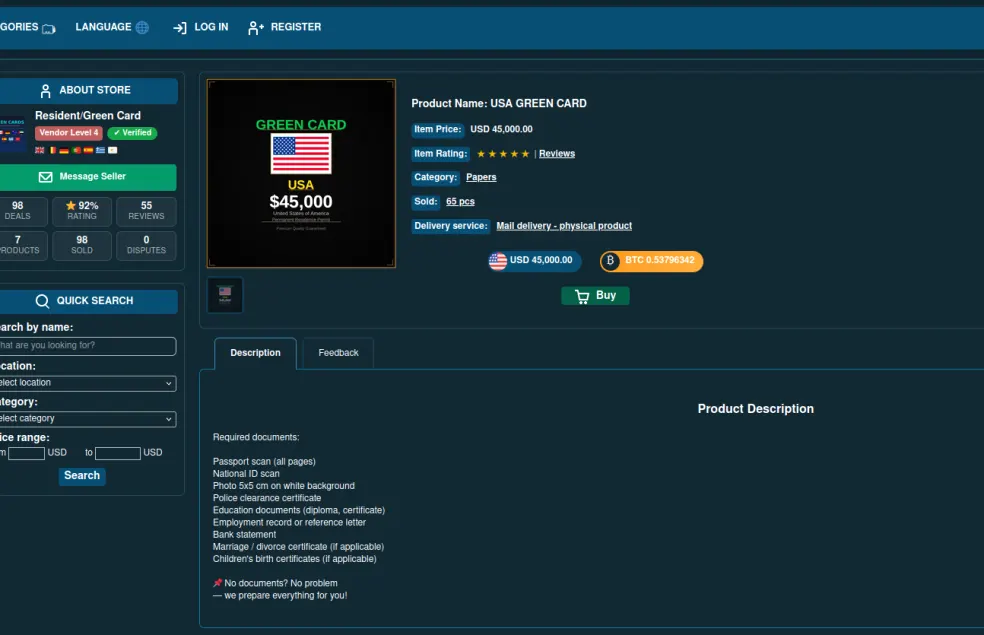 Scammers vs. Reality: The Dark Side of Buying Passports OnlineWe compare darknet passport and green-card listings with real black-market costs, from scam prices of $50 to document costs of $80,000.