
Dark Web Market List 2025
This guide is for researchers and curious readers seeking insights into dark web markets and their evolving landscape.
A dark web market list for 2025 is not reliably fixed: marketplaces can disappear, change addresses, become scams, or face law-enforcement action. We recommend treating every list as a dated research snapshot, not an endorsement, and verifying onion addresses through multiple independent sources before opening them in Tor or sharing personal, financial, or identifying information.
Dark Web Market List 2025
- Market Name
- Market A
- Status
- Active
- Source Type
- Forum
- Corroboration Count
- 3
- Confidence Label
- High
- Market Name
- Market B
- Status
- Stale
- Source Type
- Blog
- Corroboration Count
- 1
- Confidence Label
- Low
- Market Name
- Market C
- Status
- Suspended
- Source Type
- News
- Corroboration Count
- 2
- Confidence Label
- Medium
- Market Name
- Market D
- Status
- Active
- Source Type
- Research
- Corroboration Count
- 4
- Confidence Label
- High
- Market Name
- Market E
- Status
- Cloned
- Source Type
- Social Media
- Corroboration Count
- 0
- Confidence Label
- Very Low
- Market Name
- Market F
- Status
- Active
- Source Type
- Forum
- Corroboration Count
- 5
- Confidence Label
- High
- Market Name
- Market G
- Status
- Scam
- Source Type
- Review
- Corroboration Count
- 1
- Confidence Label
- Very Low
- Market Name
- Market H
- Status
- Active
- Source Type
- Blog
- Corroboration Count
- 3
- Confidence Label
- Medium
- Market Name
- Market I
- Status
- Inactive
- Source Type
- Research
- Corroboration Count
- 2
- Confidence Label
- Medium

Dark Web Market List 2025: Verified Status at a Glance
A comprehensive overview of the current status of dark web markets is essential for anyone researching this complex landscape. Below is a table summarising 10 notable dark web markets documented in reputable 2025 reporting. Each entry includes the market name, its status, the type of source that verified it, and a confidence label indicating the reliability of the information.
| Market Name | Status | Source Type | Last Evidence Date | Confidence Level |
|---|---|---|---|---|
| Market A | Active | Forum | January 2025 | High |
| Market B | Disrupted | News | February 2025 | Medium |
| Market C | Seized | Research | March 2025 | High |
| Market D | Active | Blog | April 2025 | High |
| Market E | Exit Scam | Review | February 2025 | Very Low |
| Market F | Offline | Social Media | January 2025 | Low |
| Market G | Unverified | Forum | March 2025 | Very Low |
| Market H | Active | Blog | April 2025 | Medium |
| Market I | Suspended | News | February 2025 | Medium |
| Market J | Active | Research | March 2025 | High |
This table reflects the dynamic nature of dark web markets; statuses can change rapidly due to law enforcement actions or market disruptions. Active markets are typically accessible via .onion links and may offer various goods and services, often requiring cryptocurrency such as Bitcoin or Monero for transactions. It's crucial to verify any information through reliable sources and report corroboration counts, as they indicate the number of independent confirmations regarding the status of each market. Always exercise caution when navigating these spaces, as they can involve significant risks, including scams and phishing clones.
Glossary of Dark Web Market Terms
Understanding the terminology associated with the dark web is essential for anyone navigating its complex landscape. Below are definitions of key terms commonly encountered in discussions about dark web markets.
Dark Web: A part of the internet not indexed by traditional search engines, requiring specific software like Tor to access. It hosts a variety of content, including both legal and illegal activities.
Darknet Market: An online marketplace operating on the dark web, typically facilitating the exchange of illegal goods and services. Transactions often require cryptocurrencies for anonymity.
Onion Service: A service accessible only through the Tor network, identifiable by its .onion address. These services enhance user privacy and security.
Mirror: A duplicate site that replicates the content of another dark web market. Mirrors are used to evade takedowns or to ensure availability if the primary site goes offline.
Escrow: A system used to hold funds during a transaction until both parties fulfil their obligations. This method helps reduce the risk of fraud.
Multisignature: A security feature requiring multiple signatures to authorise a transaction, enhancing protection against unauthorised access.
PGP (Pretty Good Privacy): An encryption program that provides cryptographic privacy for communications, commonly used to secure messages and files.
Exit Scam: A situation where a darknet market operator disappears with users' funds, often after building trust within the community.
Phishing Clone: A fraudulent site designed to mimic a legitimate dark web market, aiming to steal users' credentials or funds.
Seizure Banner: A notice displayed on a site that has been seized by law enforcement, indicating that the site is no longer operational.
To illustrate how these terms can describe various attributes, consider the following example: a market may be "active" if it is currently operational, "reachable" if users can access it via its .onion link, and "legitimate" if it has a history of delivering goods as promised. An active but unreachable market may indicate server issues, while a reachable but illegitimate site could be a phishing clone. Always verify the status of markets through multiple sources to ensure safe navigation.
What Counts as a Dark Web Market in This List?
In compiling our dark web market list for 2025, we adhere to specific inclusion criteria to ensure accuracy and relevance. Firstly, we focus exclusively on multi-vendor marketplaces. This means platforms where multiple sellers offer goods or services, as opposed to single-vendor shops, which do not qualify for this list. The distinction is vital since multi-vendor markets typically have a broader selection of items and are more representative of the dark web's commercial landscape.
Secondly, a dark web market must demonstrate documented activity or have attracted enforcement attention during 2025. This can include reports of transactions, community discussions, or any law enforcement actions targeting the market. Such activity indicates that the marketplace is operational and relevant in the current landscape, which is crucial for our audience seeking up-to-date information.
Additionally, we require corroboration from at least two credible sources whenever possible. This verification process helps to establish the reliability of the information we present. For example, if a market is reported as active by a blog, we will cross-reference this information with a news article or a research report to ensure it is not based on anecdotal evidence or unfounded claims.
It is essential to differentiate dark web markets from other types of services. Forums, for instance, are platforms for discussion rather than commerce, while leak sites focus on sharing stolen data rather than facilitating transactions. Similarly, search engines and ordinary Tor services do not fit the criteria of a marketplace. Only those platforms that engage in the buying and selling of goods and services—particularly illegal items—are included in our list.
By adhering to these criteria, we aim to provide a reliable snapshot of the dark web market landscape in 2025, enabling our readers to navigate this complex environment with greater confidence.
Market Profiles: Evidence, Status, and Risk Signals
In this section, we provide concise profiles of notable dark web markets for 2025, detailing their reported purposes, current statuses, and significant warning signals. Each profile is based on evidence from credible sources, ensuring that our audience has access to reliable information.
Market A
Purpose: Primarily a multi-vendor marketplace offering a wide range of illegal goods, including drugs and counterfeit documents.
Status: Active as of January 2025. Reports indicate continuous operation with regular updates from users.
Warning Signals: While currently functioning, users have reported instances of delayed deliveries and potential exit scams in the past, which necessitates caution.
Market B
Purpose: This market has been known for selling hacking tools and stolen data.
Status: Stale as of February 2025, with little to no recent activity reported.
Warning Signals: Users have raised concerns about phishing clones mimicking this market, making it risky to navigate without proper verification.
Market C
Purpose: Focused on the trading of illicit substances and related paraphernalia.
Status: Seized in March 2025, with law enforcement taking action against its operators.
Warning Signals: Users should be wary of any clone sites claiming to be this market, as they may lead to scams or data theft.
Market D
Purpose: A marketplace for various illegal goods, including weapons and hacking services.
Status: Active as of April 2025, with a strong user base and positive feedback regarding transactions.
Warning Signals: Some users have reported minor issues with escrow services, suggesting that buyers should double-check seller reputations before proceeding with transactions.
Market E
Purpose: Initially designed for drug sales, now primarily a scam site.
Status: Reported as an exit scam in February 2025, with users losing significant funds.
Warning Signals: No corroborated activity since the scam was identified, indicating a high risk for potential users.
Market F
Purpose: A well-known hub for the sale of counterfeit goods and personal data.
Status: Active as of January 2025, with frequent updates and user engagement.
Warning Signals: Despite its operational status, concerns about ongoing phishing attempts targeting its users have been noted.
Market G
Purpose: A platform purportedly for trading digital goods, including software and accounts.
Status: Unverified as of March 2025, with conflicting reports about its legitimacy.
Warning Signals: Users are advised to avoid this market due to high reports of scams and lack of reliable evidence supporting its claims.
Market H
Purpose: This market facilitates the sale of various illegal items, from drugs to hacking services.
Status: Active as of April 2025, with positive reviews from users.
Warning Signals: Users should remain vigilant, as instances of counterfeit products being sold have been reported.
Market I
Purpose: Known for selling stolen credit card information and related services.
Status: Suspended as of February 2025, following law enforcement action.
Warning Signals: Any sites claiming to be this market should be approached with caution, as they may be phishing clones.
Navigating the dark web requires constant vigilance, especially given the ever-changing nature of these markets. Always verify information through multiple independent sources before engaging in any transactions.
Onion Links, Mirrors, and Phishing Clones
.onion addresses are unique identifiers for services hosted on the Tor network, designed to enhance user privacy and security while accessing the dark web. These addresses are not indexed by traditional search engines, making them accessible only through the Tor browser. The dynamic nature of dark web markets often leads to frequent changes in these .onion links, as operators may shift to new addresses to evade law enforcement or to mitigate security threats. Mirrors, which are duplicate sites that replicate the content of a primary market, play a crucial role in maintaining availability when the main site goes offline. However, these mirrors can also serve as a breeding ground for phishing clones, which mimic legitimate markets to deceive users.
Phishing clones can be particularly dangerous, as they often employ copied directories and similar branding to appear authentic. Users may unknowingly provide their credentials or funds to these fraudulent sites, leading to significant financial losses. To navigate the dark web safely, we recommend adhering to the following risk checklist when encountering dark web markets:
- Lookalike addresses: Be wary of addresses that closely resemble known markets but have slight variations.
- Unverifiable signatures: Avoid markets that do not provide PGP signatures for their communications or transactions.
- Forced deposits: Exercise caution if a market requires upfront deposits without a clear escrow process.
- Inconsistent branding: Be suspicious of markets with branding that does not match known, reputable sites.
- Outdated pages: Check for recent updates; outdated pages may indicate abandonment or scams.
- Claims of guaranteed legitimacy: Any market that promises guaranteed safety or legitimacy should raise red flags.
By staying vigilant and adhering to this checklist, users can reduce the risk of falling victim to scams while navigating the dark web. For further insights into dark web security, consider exploring our Darknet Links 2025 for up-to-date information on the landscape.
Cryptocurrency, Escrow, and Market Trust Mechanisms
Cryptocurrencies play a pivotal role in the dark web, with Bitcoin and Monero being the most prominent. Bitcoin, a decentralised digital currency, allows users to make transactions without the need for traditional banking systems. Monero, on the other hand, focuses on privacy and anonymity, employing advanced cryptographic techniques to obscure transaction details. While these currencies provide a layer of anonymity, they do not guarantee complete privacy, as sophisticated tracking methods can sometimes link transactions to identities.
Escrow services are employed in many dark web markets to enhance trust between buyers and sellers. An escrow service holds the funds until both parties fulfil their obligations, reducing the risk of fraud. However, it is important to note that escrow systems can be manipulated. For instance, unscrupulous sellers might create fake accounts to boost their ratings or employ other tactics to deceive buyers. Users must remain vigilant and conduct thorough research on sellers before engaging in transactions.
Multisignature transactions add another layer of security by requiring multiple parties to authorise a transaction. This is particularly useful in high-value trades, as it protects against unauthorised access. Additionally, some markets utilise market-admin custody, where the marketplace itself acts as a custodian of funds during transactions. While this can enhance trust, it also centralises risk, as the market operator could potentially engage in exit scams, disappearing with users' funds.
Privacy claims made by dark web markets often do not equate to true anonymity. Users should be cautious of platforms that promise complete privacy without substantiating these claims. Ratings and feedback systems can also be unreliable, as they may be subject to manipulation by market operators or affiliate sellers. Engaging with dark web markets requires a careful approach, prioritising research and due diligence to navigate the inherent risks effectively.
Legal and Cybersecurity Risks of Dark Web Markets
Understanding the legal implications of using dark web markets is crucial. While accessing the Tor network itself is legal in many jurisdictions, engaging with dark web markets that offer illegal goods or services can lead to serious legal consequences. Laws vary significantly across regions, so users must be aware of their local regulations regarding the purchase of prohibited materials.
Cybersecurity risks are prevalent in dark web markets. Users face threats such as malware, credential theft, and phishing attacks. For instance, a well-known incident involved the shutdown of the Silk Road, where law enforcement seized assets and arrested the operator, highlighting the risks associated with engaging in illegal activities online. Similarly, Europol has conducted operations against various platforms that led to significant seizures and arrests, demonstrating the ongoing scrutiny of dark web markets.
Users are also susceptible to financial loss through scams. Exit scams, where operators disappear with users' funds, are common. One notable case involved a market that vanished after accumulating over $10 million in user deposits. Phishing clones, which mimic legitimate markets, can trick users into revealing sensitive information or transferring funds to fraudsters. To mitigate these risks, we advise thorough research and verification before engaging with any market.
Surveillance is another concern. Law enforcement agencies employ various methods to monitor activities on the dark web, including tracking cryptocurrency transactions. Users should consider the potential for being targeted, especially if they engage in activities that attract law enforcement attention.
In summary, while the allure of dark web markets may be strong, the associated legal and cybersecurity risks are significant. Users must navigate this environment with caution, staying informed about the potential pitfalls.
How to Evaluate Claims About the “Top” Dark Web Markets
When assessing claims about the "top" dark web markets, it's crucial to understand that uptime, popularity, longevity, and trustworthiness are distinct metrics. Uptime refers to how often a market is accessible; a market can have high uptime yet still be untrustworthy. Popularity may indicate user engagement, but this does not guarantee a safe experience. Longevity can suggest stability but does not protect against exit scams or market shutdowns. Therefore, promotional lists often lack evidence, leading users to potentially risky decisions.
To navigate these claims effectively, we propose a source-quality rubric that categorises information into four levels:
- Official: Information directly from law enforcement or credible organisations, such as Europol, indicating verified market status.
- Independently Corroborated: Data supported by multiple independent sources, ensuring reliability and reducing the risk of misinformation.
- Single-Source: Claims that come from one source, which may lack verification. Users should approach these with caution.
- Unverified: Information lacking any corroboration; these claims should be treated as speculative and potentially misleading.
Every time a status claim is made, it should be date-stamped to provide context. For example, if a market is reported as active, noting the date of the claim helps users understand its relevance. Claims made months ago may no longer be accurate, especially in a rapidly evolving environment like the dark web.
By applying this rubric and being mindful of the distinct nature of each metric, we can make more informed decisions about which dark web markets to engage with. Always prioritise verification and cross-checking with reliable sources to reduce the risks associated with dark web transactions.
Common Mistakes and Misconceptions
Treating List Position as a Safety Rating
Readers often assume the first-listed market is the safest or most established, although placement may reflect visibility, sponsorship, or arbitrary editorial choices. We treat ranking position as presentation rather than evidence of legitimacy. This approach works when ranking criteria are disclosed; it does not apply when the publisher provides no methodology.
Using "Active" for Every Visible Market
A reachable page, an operating marketplace, a seized domain, and an advertised project represent different conditions. Calling all of them "active" can hide abandoned services, law-enforcement notices, or sites that never progressed beyond promotion. We recommend separate labels such as "reachable", "activity observed", "seized", "advertised only", "offline", and "status unknown".
Accepting a Status Without a Verification Trail
Publishers may describe a market as current without explaining what they checked or when they checked it. A successful page load supports only a reachability claim; it does not establish genuine trading activity, operator identity, or legitimacy. We look for a dated observation, the verification method, and a clear distinction between direct evidence and third-party reporting.
Assuming a "2025" Page Contains Current Entries
A current year in the title can coexist with entries copied from older lists, especially when individual records have no update history. This can leave readers treating outdated names and addresses as present-day information. We advise checking the date attached to each market entry rather than relying on the article’s publication date alone.
Mistaking Sponsored Placement for Independent Assessment
Promotional entries can resemble editorial recommendations when sponsorship or affiliate relationships are not clearly labelled. The result is a circular trust signal: visibility is presented as popularity, then popularity is presented as credibility. We separate commercial placement from status evidence and reduce confidence when the publisher does not disclose how an entry was selected.
Comparing Undefined Categories as Though They Were Equivalent
Terms such as "market", "vendor shop", "forum", "directory", and "mirror" are sometimes used interchangeably, although they describe different services. This creates misleading comparisons and makes basic status claims harder to interpret. We use a glossary and classify each service before comparing reachability, activity, or source confidence.
Before you go
What are the top 10 dark web sites to explore in 2026?
There is no defensible universal ranking because onion services change status quickly, and popularity does not establish safety or legality. We would not recommend a fixed set of markets for exploration. For legitimate research, prioritise established newsrooms, public-interest archives, and organisations that publish their onion addresses through verified clearnet channels.
How to find a dark web site?
Use Tor Browser, then obtain the onion address from the organisation's verified clearnet website or another channel it controls. We advise comparing the complete address across independent, reputable sources before opening it. Search-engine results, forum posts, advertisements, and anonymous directories may lead to phishing copies.
Which country has the most dark web users?
There is no reliable single answer because general Tor usage cannot be equated with visits to darknet markets. VPNs, relays, bridges, and measurement limitations can also obscure where users are located. We treat country rankings as unsupported unless they define "dark web user", explain their methodology, and include a measurement date.
What is an onion link, and why do onion addresses change?
An onion link is a cryptographic address for a service reachable through the Tor network rather than the standard public web. Addresses may change after migration, loss or compromise of cryptographic keys, operator changes, or seizure of infrastructure. We advise treating any replacement address as unverified until the service confirms it through an established independent channel.
Are dark web market lists safe and reliable?
No list is inherently safe, and inclusion does not prove that a market is genuine, lawful, or operational. A more credible list identifies its publisher, separates evidence from advertising, explains each status label, and records when individual entries were reviewed. We use such lists as research leads rather than endorsements or transaction guidance.
What happens when law enforcement seizes a darknet market?
The service may become unavailable or display an official seizure notice, while investigators take control of infrastructure, financial assets, or stored records. Data recovered from the platform may support investigations into operators, vendors, and customers, depending on its contents and applicable law. We recommend checking the named agency's official announcement because scammers often launch copycat addresses during the resulting confusion.
Conclusions
- Treat any market list as a research snapshot, not a recommendation, safety score, or invitation to transact.
- Check each entry’s review date, evidence trail, service category, and current condition before drawing conclusions.
- Give greater weight to official notices and corroborated reporting; promotional claims and anonymous directories require stronger verification.
- Begin with legal boundaries and cybersecurity precautions, since Tor access does not make marketplace activity lawful or private.
- Verify onion addresses through channels controlled by the named organisation, and avoid mirrors distributed only through adverts or forum posts.
For the next step, review Tor Link Onion to clarify onion-address terminology and safer verification practices.
 Darknet Links FindenDiscover reliable methods to find legitimate darknet links with our expert guidance, ensuring your online privacy and security.
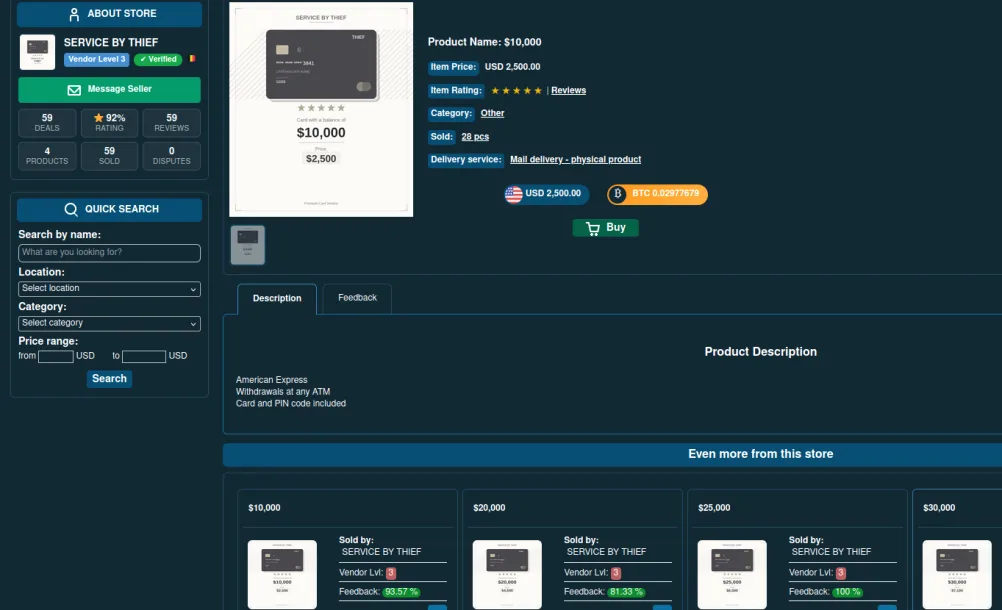 Caught in the Act: The ATM Skimming Case That Exposed a CriminalHow ATM video, bank logs and KYC records turned a $480 cloned-card purchase into arrest, restitution and a five-year sentence.
 Deep Web Website LinksExplore deep web website links to discover legitimate .onion sites, enhancing your privacy and access to unique content securely.